
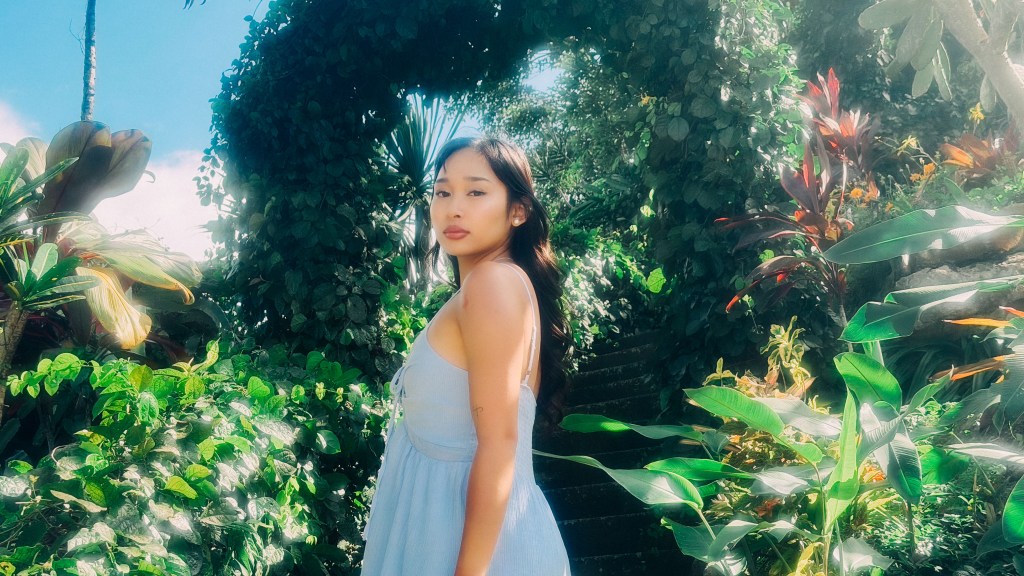
Filipina pop-R&B artist Julia Q is entering a new chapter in her musical journey with Lotus, her forthcoming debut EP, a deeply personal body of work shaped by femininity, spirituality, emotional introspection, and intentional living.
Through reflective songwriting and immersive production, Julia Q explores themes of self-worth, presence, affirmation, gratitude, and the inner dialogue that influences how people see themselves and move through the world. Blending emotional honesty with soft yet intentional storytelling, her music goes beyond simply expressing feelings—it encourages listeners to look inward, reconnect with themselves, and find confidence from within.
Lotus marks the beginning of a new artistic era for Julia Q. Her first cohesive body of work, the five-track EP is rooted in spirituality and love while encouraging listeners to look beyond superficiality, embrace the present moment, and rediscover the beauty within themselves.
For the debut of Spotlight Sugbo, Julia Q takes us behind the music of Lotus, sharing her artistic journey, creative process, and the deeply personal story behind her five-track debut EP.
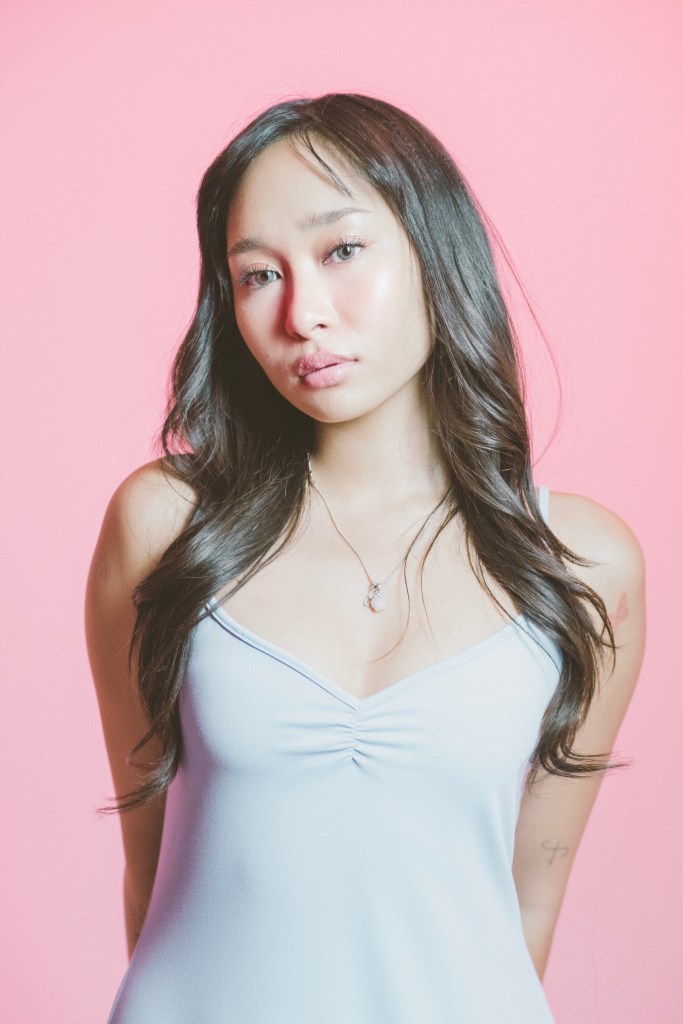
When did you first realize that music was something you wanted to pursue professionally?
Since I was a young girl, music has always been a part of my life. There’s a funny story my parents told me: when I was an infant, I couldn’t go to sleep without my favorite lullaby being sung to me. One night, my mom fell asleep while singing it, but I wasn’t asleep yet. When my dad came home, he found me humming the lullaby to myself. So I guess music has been with me since before I could even talk.
Growing up, I always excelled academically, so even though I had musical extracurriculars throughout my academic life—I was president of our choir and glee clubs, joined local theater productions, and performed as part of DLSU’s vocal group in college—I think I came to see music as something that existed alongside my “real” responsibilities.
It was something I loved and pursued, but ultimately treated as a hobby or extracurricular activity that I would do outside of what I needed to accomplish.
As an artist, I was releasing music and doing gigs alongside my studies, and later while juggling a corporate job after graduation. For a long time, I was comfortable keeping music in that space.
But recently, I became more open to admitting to myself that I actually don’t want to keep music on the sidelines. I want to give it my whole heart and intention and pursue it as my main thing.
This realization has been a long time coming. Music has always been there—I just needed to give myself permission to finally treat it as more than something I did on the side.
Was there a particular moment or experience that inspired the creation of Lotus?
Lotus as a project didn’t really take shape until early this year. The five songs on the EP were written sporadically over the years, with no clear intention for them to be released together, let alone become a cohesive body of work.
I wrote the lead single, “Angel Numbers,” in 2022, the first single, “Lipgloss,” sometime in 2023, and the latest single, “Over and Over,” was actually the last addition, having been written in January of this year.
When I wrote those earlier songs, I didn’t take them too seriously. They were simply songs I had written and put aside. Then, in December last year, I was sitting at my table and randomly decided to revisit all the songs I had written that hadn’t been released yet.
As I listed out the titles, I realized that four of them had surprisingly similar themes. They were all connected in some way to modern spirituality and astrology-inspired language—“Angel Numbers,” “Throat Chakra,” “Like an Aries,” and so on.
That was the first moment I thought, maybe there’s actually something here. Maybe these songs could belong together as a body of work.
I was very shy about the idea at first. But when I wrote “Over and Over” the following month, that was the nail in the coffin. I realized that, thematically, it was the missing piece. The message of the song fit so naturally and filled the gap in the story I was telling with the other four songs that I finally knew what the EP was about and what I wanted its overall message to be.
What makes this so magical for me is that I never intentionally set out to write an EP with a cohesive storyline. I simply wrote these songs as I was expressing myself at different points in my life, and somehow, over the span of four years, they ended up finding each other.
Why did you choose “Lotus” as the title of your EP? What does it symbolize for you?
The funny thing is that the EP had already been in the works for around five months before I even landed on the title.
In January, I confirmed to myself and my close collaborators that this project was happening, and over the next few months, we had already released two singles and done so much work around the EP. But throughout that entire time, I still had no title.
I started becoming aware that time was running out to decide on a title, but nothing was coming to me. The good thing was that I wasn’t actually stressed about it. My creative director would check in with me more and more often because, of course, he needed the title to finish the creative assets, and I would just say, “I don’t know yet, but I know it’ll come soon enough as long as I don’t force it.”
And amazingly, that is exactly how it happened.
One night, I started reading a book called Lessons of the Lotus by Bhante Y. Wimala. I came across a passage in the first chapter describing what the book is about. It talked about how the lotus is grounded in mud and surrounded by murky water, but grows beyond the impurities around it, reaches the sunlight, and eventually blossoms into a beautiful flower.
The image of a lotus blooming through the mud felt like such a beautiful metaphor for the journey I think my life—and really, all of our lives—can take.
The mud represents the impurities of life, negativity, and all the things in the world that can strip us of our spirit: distractions, consumerism, ego, and so on. We can move through those things, grow beyond them, and choose to move toward the light—to eventually blossom.
It immediately struck me because it perfectly encapsulated how I felt at that point in my life and the journey I was capturing in the EP. It was then that I realized Lotus had to be the title.
What’s crazy to me is that so many of the visual choices Nikko made throughout the project already reflected this idea, almost as if we had established the Lotus title and thesis from the beginning.
In the “Over and Over” music video, for example, one of the most significant moments is when this big white light shines from my heart. The EP cover carries that same imagery of light coming from within.
Another kismet detail is that I have a lotus flower tattoo, which was actually my first tattoo. At the time, I didn’t get it because of any deeper symbolism—I simply liked how it looked. Looking back, I feel like I’ve always been drawn to this symbol, and it’s been this cheeky recurring element in my life that only fully clicked for me now.
That’s really how this whole project has felt: there have been so many things that seemed to align without me forcing them. “Perfect” almost feels like an understatement.
Can you tell us about your creative process for Lotus? How many tracks are included in the EP, and what can fans expect from it?
Lotus is my first body of work, and once I understood what the project was really about, the next step was figuring out how to turn that essence into a cohesive world.
I knew I could take it in so many different directions. I could go fully into modern spirituality, or I could make it very simple and stripped back.
That’s why it was very important to me to work with a creative director. I’m very blessed to have worked with Nikko Tan, who helped me uncover the truest essence of the EP by asking me a lot of deep and personal questions.
Our work together almost felt like shadow work—which is essentially looking inward, confronting parts of yourself that you may not always want to face, and becoming more honest with yourself.
In many ways, that’s also what this EP is about: introspection, coming back to yourself, sitting with yourself, confronting yourself, and being true to yourself.
Once we figured out that core, we started shaping the world of the EP piece by piece.
Simultaneously, I worked track by track with my main producer and boyfriend, Jericho Streegan, on the sonic side. We prioritized the singles first, and then focused on bringing the final three songs to the finish line, which was quite a feat while juggling studio sessions alongside my corporate job.
We actually finished producing the last track, “Angel Numbers,” last too—which is funnily enough the first song I ever wrote for this project.
Fans can expect very new sounds from me. My catalog has been rooted in R&B, and I spent the majority of my artistic career making R&B. Lotus marks a new era of my artistry—not just sonically, but also in terms of the themes and the world I’m creating around the music.
It’s a five-track project, and I hope fans will hear a truer version of me in it. This project feels very, very me.
Which song on Lotus feels the most personal to you, and why?
It might be the last track and lead single of the EP, “Angel Numbers.” It’s particularly special because it was actually the first song I wrote for this body of work, long before I knew it would eventually become an EP.
When I wrote it, it was really just a random idea that I didn’t take very seriously. On the surface, the lyrics are about meeting someone who feels so right, so divine, and so kismet. It’s about experiencing a connection that feels almost magical—someone who brings so much light into your life and inspires you to become a better version of yourself.
But little did I know that, years later, I would come to resonate with those lyrics in a completely different way.
They ended up encapsulating exactly how I feel about this project. In a way, “Angel Numbers” became my love song to Lotus—to what this project has brought into my life, what it has taught me, and how it has changed me.
The song captures this feeling of divinity: being so happy because you feel aligned, and suddenly becoming aware of that sense of divinity all around you.
When I talk about all the kismet things that happened throughout the making of this EP—the way the title came to me, the way the visuals aligned with the concept without us consciously planning it—that’s exactly what I mean.
It’s honestly crazy to me that I wrote this song four years ago and only unlocked its truest meaning now. Somehow, the version of me who wrote that song was already writing about the experience I would eventually have making this EP.
In the bridge, I sing:
“And you show me the magic of surrender
Tryna get better for yourself mm
That’s when everything aligns it makes me wonder
Just how it all could feel so divine”
That pretty much sums up the journey I took to get to where I am now, having finished this EP.
It took a lot of surrendering control and rigidity, and stripping away the “mud” that had built up around me. I tried to become better not for any external reason, but simply for myself.
And when I started doing that, all these aligned and almost divine-seeming coincidences began happening one after another.
Somehow, they came together to create this project—and, at the same time, the person I am now having finished it.
The Cebuano Music Scene
Cebu continues to produce incredible artists. What makes the Cebu music scene unique?
Cebu is unique because we have so many incredible artists who are also deeply involved in songwriting and the creation of their music. Sometimes I feel like, in the same way Tennessee is known as the songwriting capital of the US, Cebu is on its way to having that reputation in the Philippines.
The fact that the major music industries aren’t stationed here is both a blessing and a curse. It’s a curse because funding and resources are always a challenge, but it’s also a blessing because we’ve had to become very hands-on with our craft.
We write, produce, and create our music from the ground up. We don’t have million-dollar corporations making those decisions for us.
I think that’s an edge we should embrace. Cebuano artists know how to make something out of nothing—and make something amazing out of it.
We’re also a very close-knit community. Cebu is small, so the music scene feels like one big family. Artists really support each other here because we understand what it takes and how much work goes into making things happen.
How do you stay true to your artistic identity in today’s fast-paced music industry?
Creating Lotus gave me a much stronger sense of artistic identity than I had before. My artistic message and my values now feel grounded in the truest sense of who I am, and I’m very grateful for that.
I feel very different from the version of myself who was trying to navigate the industry before this. Now I feel much more grounded and self-assured.
Just like the lotus, there will always be a muddy environment around you, but you can still bloom through it—steadfast, peaceful, and true to yourself. That’s the attitude I hope to carry throughout my career.
I think artists must know themselves and stand for something true in order to thrive. The industry is fast and constantly changing, but if you know who you are and what you stand for, you’re better equipped to navigate it.
For me, that means continually stripping away the external noise and asking: Who am I? What do I actually believe in? What do I want to express with my art? How do I want this to impact others?
It’s about finding this truth—not who I think I’m supposed to be, but who I really am underneath it all.
I think the artists who are willing to sit with themselves, question themselves, and find their truth, even when it’s uncomfortable, are the ones who find longevity.
Looking back at your debut single “Tug of War,” what would you tell your younger self today?
I would tell her not to let anyone dim her light, to trust her instincts more, and not to give so much of her power away. She’s capable of much more than she thinks.
But I’d also tell her to keep writing. Because if it weren’t for everything she experienced along the way, I wouldn’t be where I am today.
What is your message to your fans?
To anyone reading this, I hope you find that lotus nature within yourself—the ability to stay grounded and keep blooming, no matter what surrounds you.
Julia Q’s “Lotus” EP Launch

Fans will get the chance to experience Lotus in full on August 14, 2026, at Cebu Making Space, where Julia Q will officially launch her five-track debut EP.
Rather than a traditional gig, the event is designed as an intimate gathering—one that feels more like spending an evening in a friend’s living room. The experience will bring Lotus to life through live performances, immersive visuals, and artist conversations that invite the audience into the creative process behind each song.
Alongside performances from Reanne Borela and ICY, Julia Q will debut all five tracks of the EP while sharing the stories, symbolism, and creative decisions that shaped the project.
The evening will also feature a specialty tea and cocktail menu from Cebu Making Space’s The Tea and Gallery, adding to the warm and reflective atmosphere of the event.
Tickets are available for PHP 200 for pre-registration online, which also comes with an automatic raffle entry for giveaways, and PHP 250 for same-day walk-ins.
For updates and more information, follow Julia Q on Facebook at @juliaqmusic and Instagram at @juliaquijano.
Julia Q’s debut EP Lotus represents a period of surrender, self-discovery, and transformation, an artistic journey shaped by years of songwriting, unexpected connections, and a growing understanding of who she is.
Like the flower that inspired its title, Julia Q’s new era is about finding light in the middle of the mud, growing through it, and finally giving herself permission to bloom.


Leave a Reply